
The contrarian season
Hwange in the rains: the honest case for going
Hwange's dry-season spectacle runs on pumped water: with no rivers, every animal in the park has to drink at one of about sixty artificial pans. From November the rains hand out free water everywhere, and the machine that makes the famous sightings switches off. This page is the honest case for coming anyway.
If you only want the answer
Yes, with conditions: Hwange never closes, and November to March brings peak birding, newborn animals and empty pans. But pumped waterholes stop drawing game, so you need a 4x4 from December to March.
First, the fact most people get wrong
Hwange does not close in the rains. There is no gazetted closure, no locked gate, no date to plan around: the ZimParks camps at Main Camp, Sinamatella and Robins are open year-round, and so are almost all of the private camps, which is unusual for Zimbabwe. Mana Pools' camps shut around mid-November until April; Hwange's gates open at 06:00 every morning of the year.
What changes is not access but physics. The park's entire dry-season logic rests on pumped water, and the rains dissolve it. Understand that one mechanism and every green-season decision follows from it.
What rain does to a pumped park
Hwange has no permanent rivers. In the dry months, around sixty pumped waterholes deliver over a million litres a day, and every elephant, buffalo and lion in 14,650 square kilometres has to come to one of them. That is the whole trick behind the September afternoons when a hundred elephants queue at Nyamandhlovu.
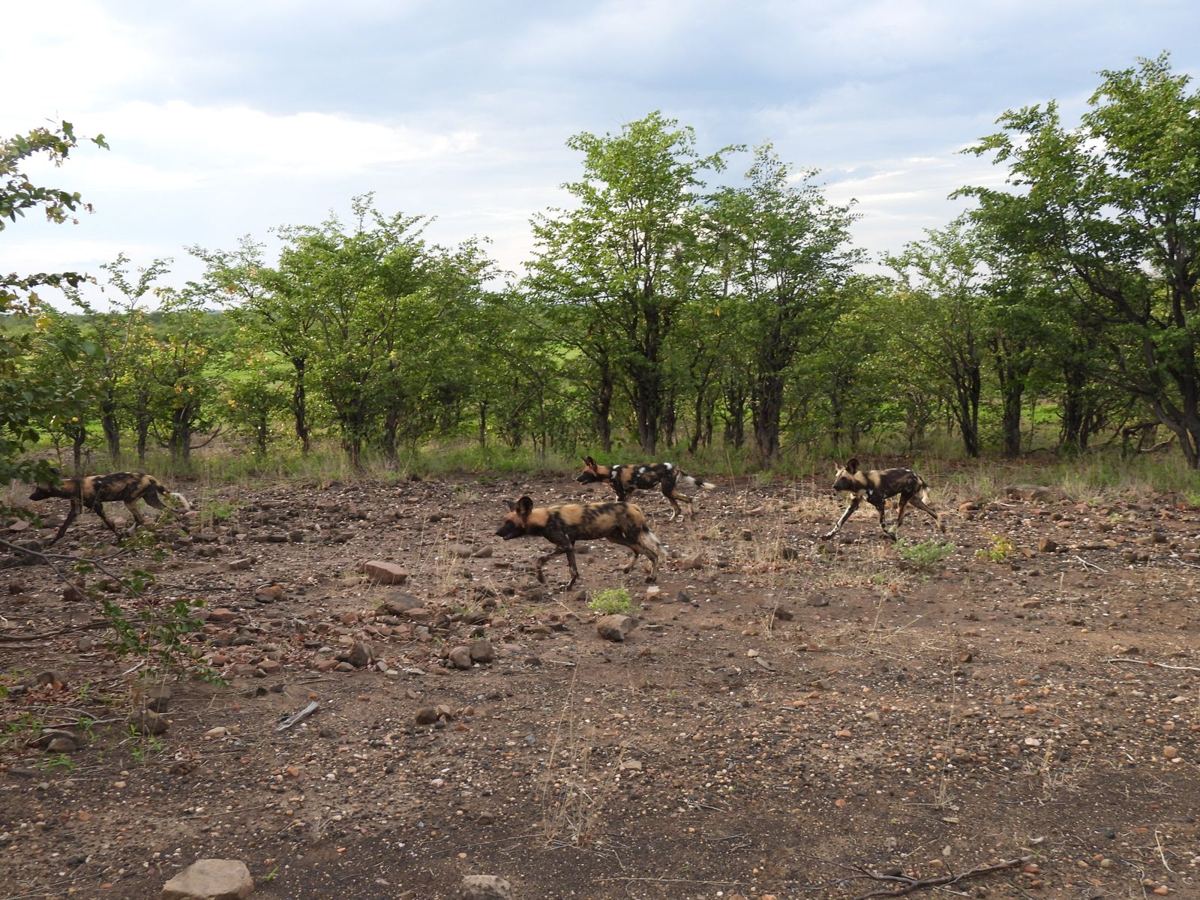
From November the natural pans fill, puddles stand in every depression, and the animals no longer need the pumps. Game spreads out into the teak and mopane woodland, the grass comes up head-high in places, and the same pan that carried a traffic jam of elephants in October can sit quiet for an afternoon. The animals are all still there. They are simply everywhere instead of somewhere, and thick cover keeps the score low.
The compensation arrives on the same weather. The first storms trigger the impala lambing flush, zebra and wildebeest spread out over the greening grasslands of the south-east with foals and calves at foot, and roughly four hundred bird species, the summer migrants now among them, make November to April the birding peak of the year.
| Month | Average max | Rainfall | Rain days | What it means |
|---|---|---|---|---|
| November | 31.4°C | 97 mm | 14 | Early November still fishes like the dry season; the first storms end it |
| December | 29.1°C | 158 mm | 20 | Rains established, park green, lodge prices drop |
| January | 29.0°C | 191 mm | 20 | The wettest month; storms most afternoons |
| February | 28.2°C | 123 mm | 16 | Peak green: high grass, calves, birds |
| March | 29.1°C | 69 mm | 11 | Rains taper; lush park, very few visitors |
Climate figures are Open-Meteo normals for 1991 to 2020, retrieved August 2026. The waterhole pumping figures are from the Bhejane Trust programme, gathered July 2026.
Which camps and roads suffer
The pain is not spread evenly. The north takes it worst: Robins Camp itself stays open year-round, but its black-cotton roads get difficult from late November, and black cotton after rain is not a slow road but a closed one in everything short of a winch-equipped convoy. Sinamatella's basalt-country roads are the roughest in the park in any season and do not improve wet. Plan the northern circuit for the dry months.
Park-wide, the internal roads need a 4x4 from December to March. The Kalahari sand that makes easy driving when dry turns heavy, and the clay stretches turn greasy after every storm. A handful of camps sit the season out entirely, listed below; the rest stay open and discount.
| Camp | Green-season status |
|---|---|
| ZimParks Main Camp, Sinamatella, Robins | Open year-round |
| Robins sector roads | Black cotton, difficult from late November |
| Hwange Bush Camp (north-west) | Closed; open 1 April to 30 November only |
| Kapula Private Camp (Masuma) | Effectively April to November |
| Jozibanini Camp (remote south-west) | Possible short green-season break |
| Main Camp sector concessions (Linkwasha, Somalisa, Verney's and others) | Open year-round |
| Boundary lodges around Dete and Sikumi | Open year-round |
Camp seasons from each operator's own information, gathered July 2026. Confirm any wet-season plan with the camp; a wet January can shut a road the brochure calls open.
Main Camp is the workable base
The green-season answer is the south-east. Main Camp is reached on tar the whole way from Victoria Falls or Bulawayo, so getting to the gate never depends on the weather, and the sector's road network is the biggest and best-maintained in the park. Nyamandhlovu Pan and its viewing platform sit ten kilometres from camp, close enough to check daily without committing to a long loop.
It is also the cheap way to see the park. ZimParks charges the same flat rates all year: camping from $23 a pitch, chalets from $60, lodges from $90, and the park entry fee is $12 per person per day when you sleep inside. The private camps around the Main Camp sector and the boundary lodges near Dete stay open and generally drop their rates, so the green season is when a Hwange lodge stay costs the least it ever will.
Drive the day like a green-season driver: out at 06:00 when gates open, loops kept short and reversible, back by the 18:00 gate rule with margin, and no clay shortcuts after a storm. One extra 2026 note: the A8 from Victoria Falls is under reconstruction and the 195 km to Main Camp takes three to four hours, rain or shine, so budget the day accordingly.
Who should not come in the rains
Said plainly: the green season is a specialist's Hwange. The park stays open and safe to visit, but the thing Hwange is famous for, game piled up at pumped pans, does not happen between December and March, and nothing you do with a vehicle will make it happen.
- First-time safari-goers who chose Hwange for the waterhole spectacle. August to early November is your window; the rains give you thick bush and scattered game instead.
- Anyone without a 4x4 between December and March. The tar gets you to Main Camp, but the park roads behind the gate need clearance and traction.
- Anyone set on the Robins or Sinamatella circuits. The black cotton in the north makes them a dry-season plan, whatever the map suggests.
- Photographers who need density over atmosphere. Green-season Hwange is storm skies, newborns and empty pans, not hundred-elephant queues.
- Anyone unwilling to take malaria seriously. Zimbabwe is a malaria area year-round and the risk is highest in exactly these months; take prophylaxis.
If you do come: the short checklist
- Book ZimParks accommodation online at book.zimparks.org.zw, or by email (info@zimparks.org.zw) or phone. The Hwange regional office is on +263 779 559 236.
- Fill up in Victoria Falls, Bulawayo, Hwange town or Dete and carry range for the whole trip; assume no fuel is for sale anywhere in the park.
- Bring US dollars in cash for gates and camps, in small denominations.
- Keep the 18:00 gate rule sacred and plan every loop with a wet-weather escape back to the tar.
- Pack for storms and for sun: mornings can be bright, and by 15:00 the anvil clouds are up. That light is the reason photographers come.