
The full field guide
Wildlife in Hwange National Park
Hwange has no permanent river, so everything you might see here is pulled toward a pump instead of a bank. That single fact decides where the elephants gather, where the wild dogs den and where the lions wait.
If you only want the answer
Expect around 40,000 elephants in the dry season, reliable lion sightings and one of Africa's three strongholds for wild dog. All three cluster at roughly sixty pumped waterholes, especially from August to November.
What lives here, and what your odds are
Read the colours as odds: green is near-certain at the pumped waterholes, amber is plausible, terracotta is a story worth telling afterwards. Hwange's list is unusually long, with a hundred mammal species and eight large carnivores, and the pumped waterholes make the dry-season odds far better than the size of the park suggests.
- Elephant Guaranteed Hundreds at pans
- Impala Guaranteed
- Warthog Guaranteed
- Baboon & vervet Guaranteed
- Kudu Very likely
- Giraffe Very likely
- Zebra Very likely
- Buffalo Very likely Robins: herds of 2,000+
- Waterbuck Very likely
- Sable antelope Very likely Unusually good here
- Lion Very likely Highest density at Robins
- Spotted hyaena Very likely
- Steenbok Very likely
- Wild dog Good chance One of Africa's top three populations
- Leopard Good chance Concession night drives help
- Roan antelope Good chance
- Eland Good chance
- Tsessebe Good chance
- Wildebeest Good chance
- Jackal Good chance
- Cheetah Takes luck
- Brown hyaena Takes luck
- Honey badger Takes luck
- Gemsbok Takes luck South-west only
- Hippo Takes luck Only at the dams
Chances reflect a typical three-night dry-season stay. In the green season everything disperses and the odds drop sharply, except for birds. Species silhouettes from PhyloPic (CC0, CC BY and CC BY-SA).
Elephants, and a lot of them
Hwange holds Zimbabwe's largest elephant population, commonly put at around forty thousand at the height of the dry season. No recent official census has been published. Culling stopped in 1986 and the population roughly doubled in the five years that followed.
What makes the viewing extraordinary is the water. With no rivers, every elephant in fourteen thousand square kilometres has to come to a pumped pan, and in September and October they arrive in herds of a hundred and more. Sit at Nyamandhlovu, Masuma or Ngweshla in the late afternoon and you will not need to drive anywhere.
One correction worth making: the famous Presidential Elephant herd is a specific, protected group near Dete, not the park's forty thousand. Plenty of websites conflate the two.
Lions, and the one the world remembers
Hwange's lions have been studied continuously by Oxford University's WildCRU for decades, which makes them among the best-understood in Africa. The park came to global attention in July 2015 when Cecil, a collared male who had lived here for thirteen years, was lured out and killed just beyond the boundary.
Robins in the north-west is widely described as the sector with the most lions, ourselves included until now. We asked the operator of a lodge there to point us at the research behind it and they could not, so we have taken the claim down. What is not in dispute is the prey base: buffalo herds of two thousand and more, and permanent water in a park that has no rivers. Around the pumped pans in the south-east the lions simply wait, because everything has to drink eventually.
Wild dogs and the painted dog story
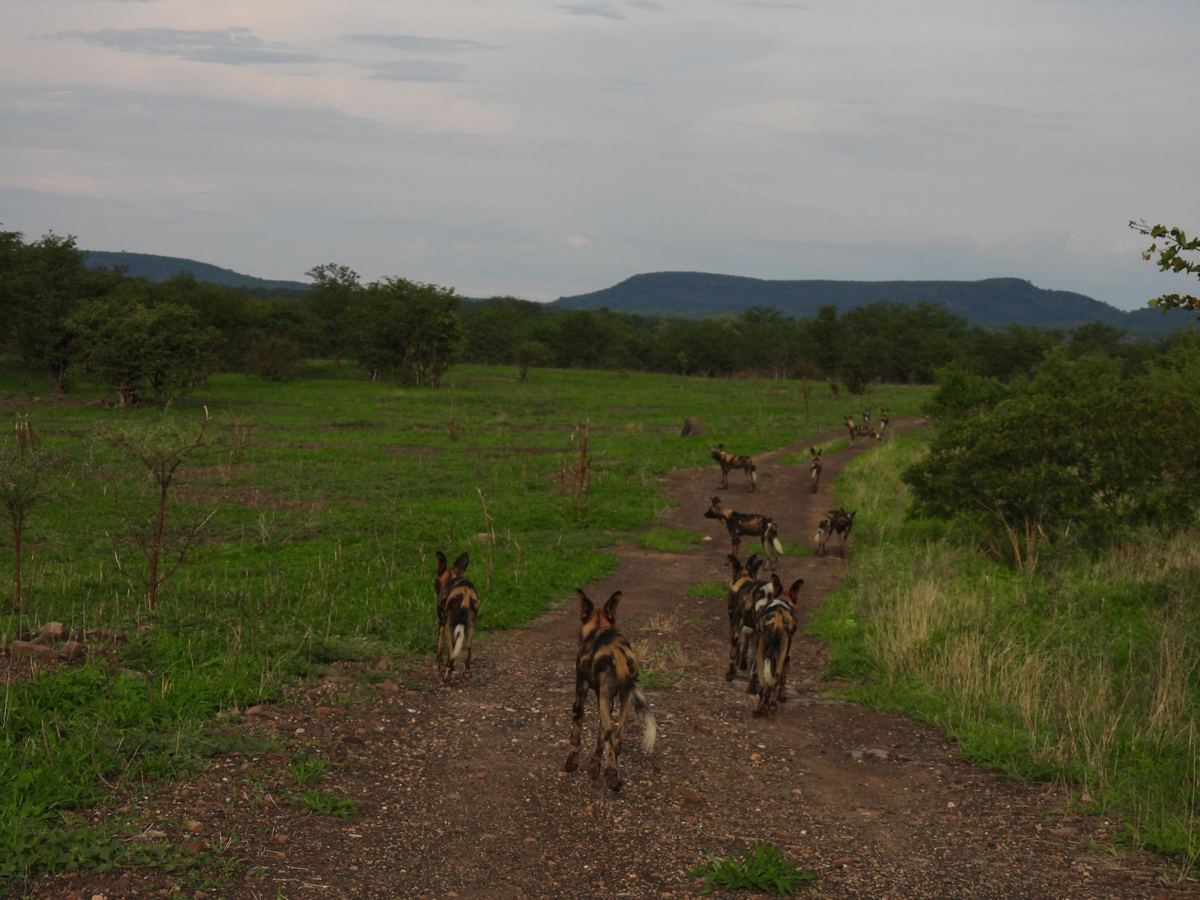
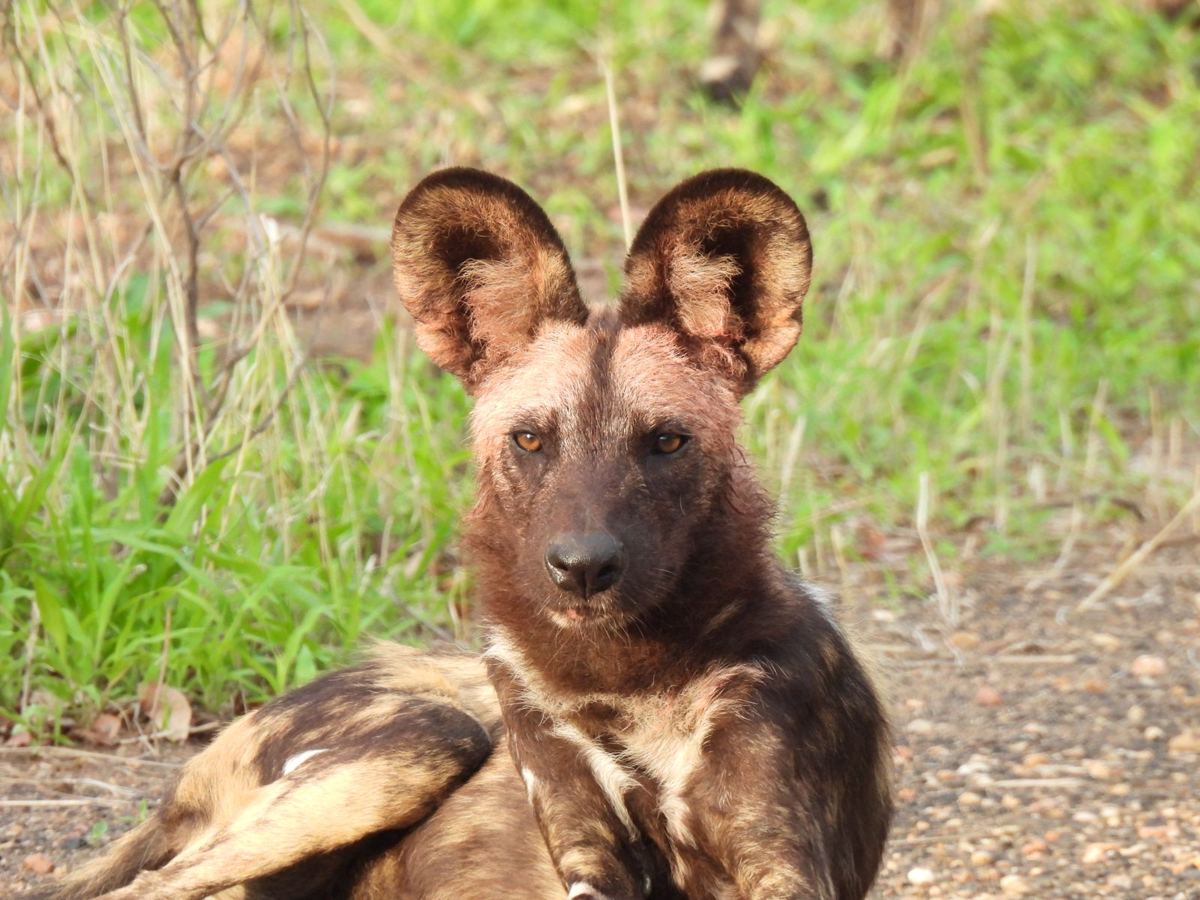
Hwange holds one of the three most significant African wild dog populations left anywhere, alongside Nyerere in Tanzania and Selous. The Painted Dog Conservation centre sits on the Dete road opposite the airport, running an anti-poaching unit, a rehabilitation facility for snared and orphaned dogs, and an art centre where sculptures are made from confiscated snare wire.
You can visit for free, and it is the best half-day off a game drive in the area. Sightings in the park itself are a matter of luck and timing: packs range enormously, and your odds improve in the denning months around June to August.
The antelope, and the sable in particular
Nineteen large herbivore species live here, and the standouts are the ones that are hard elsewhere. Sable antelope are genuinely reliable in Hwange in a way they are not in most parks, and roan turn up often enough to hope for. Tsessebe, eland and gemsbok fill out a list that reflects the park's position on the edge of the Kalahari.
Add kudu everywhere, giraffe browsing the teak lines, zebra and wildebeest on the plains, and buffalo in herds that in the north can be genuinely enormous.
Birds: around 400 species
Around four hundred species are recorded. The teak and mopane woodland holds the dry-country specials, the pumped pans pull in waders and storks, and the dams at Mandavu and Masuma add hippo, crocodile and a proper waterbird list.
November to April is the birding peak, when migrants arrive and the bush is green, which is exactly when the mammal viewing is at its weakest. Pick your priority.
- Southern ground hornbill Turkey-sized and booming, and Hwange is a reliable place to find family parties
- Bateleur The tumbling short-tailed eagle, rocking over the pans on most dry-season days
- Martial eagle Africa's most powerful eagle, big enough to take a young antelope
- Kori bustard The world's heaviest flying bird, striding the open grassland of the Ngamo and Kennedy plains
- Bradfield's hornbill A dry-woodland speciality of this corner of Africa, at the edge of its range here
Where to look, sector by sector
| Sector | Best for |
|---|---|
| Main Camp and the southern pans | Elephant at Nyamandhlovu, Ngweshla and Kennedy; the classic Hwange experience and 80 per cent of visitors |
| Robins, north-west | The park's most consistent lion reports, buffalo herds of 2,000-plus, roan and sable, regular cheetah and wild dog |
| Sinamatella, north | Mandavu and Masuma dams with hippo and crocodile, plus two of the park's best hides |
| Ngamo and Linkwasha plains, south-east | Open grassland: cheetah, kori bustard, big predator sightings, and the private concessions |
| The south-west (Jozibanini) | Deep Kalahari sand, gemsbok, and a corner of the park that sees almost no vehicles |
The water is pumped, and that matters
None of this happens by itself. Around sixty waterholes are pumped across Hwange, increasingly by solar, delivering over a million litres a day. Much of it is funded and maintained not by the state but by trusts such as Bhejane and Friends of Hwange, and by the private operators, with Imvelo alone running about a fifth of the pumps.
At several camps here, your bill is directly connected to whether the pumps keep running.
Folklore figures are marked as such. No recent official elephant count exists for Hwange.